


Next.js MVP: OpenNext + CDK
Three days to ship a production Next.js app on Lambda and CloudFront. Real stack from qr-plakat.de.
- Duration
- 3 days
- Level
- Intermediate
- Format
- On-site or remote
- Price
- On request
What to expect
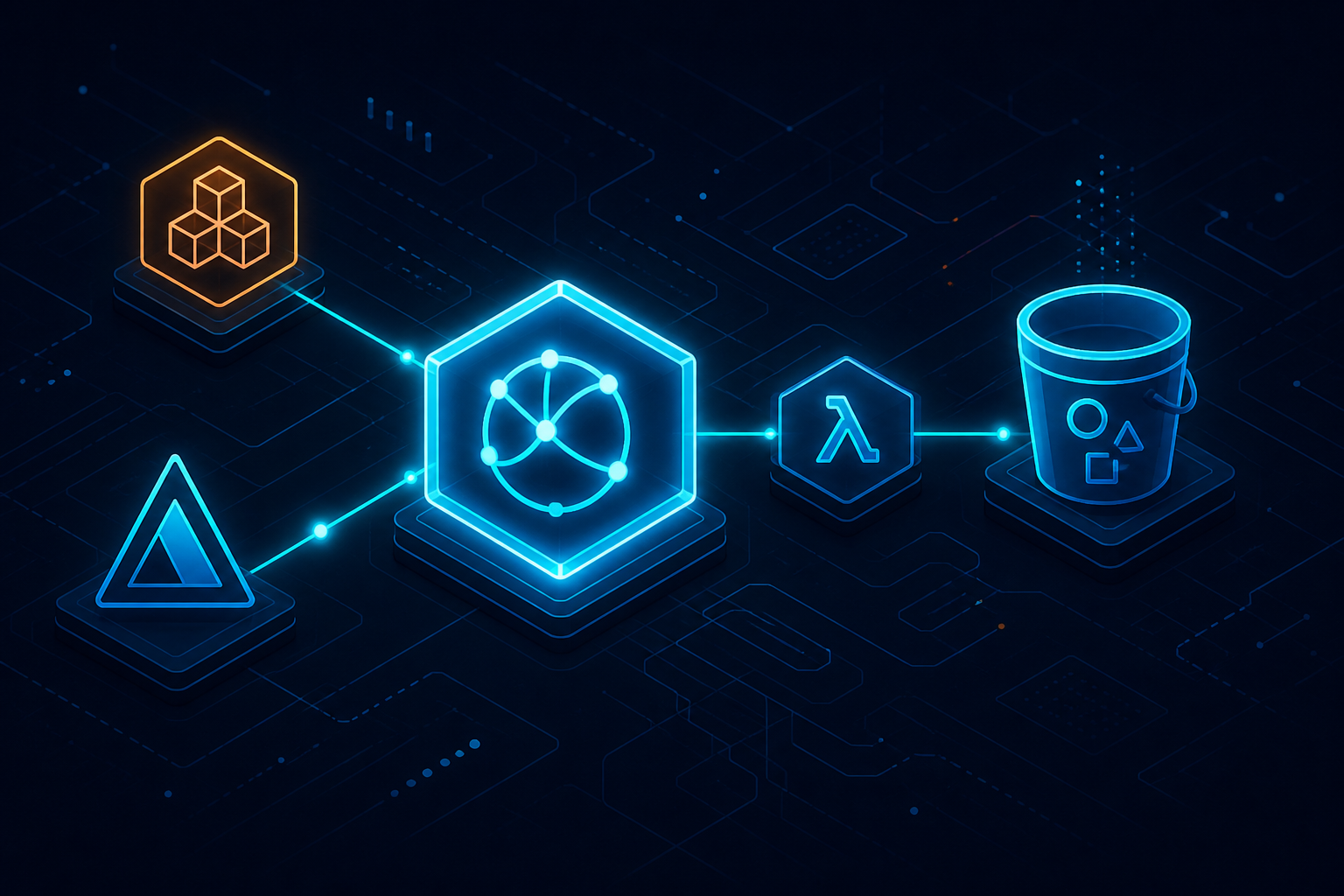
Fargate wants always-on tasks, a VPC, and an ALB before you have users. OpenNext maps Next.js to pay-per-request Lambda — the stack I shipped for qr-plakat.de. Three days in your AWS account.
- Scale to zero — no baseline compute when traffic is bursty or pre-revenue
- Keep App Router, RSC, and Server Actions without running next start in Docker
- CDK stacks you own: Data, Auth, Web, CI/CD — same IaC as bigger projects
- One GitHub Actions job from lint to CloudFront invalidation
- Graduate to ECS Fargate later if product-market fit justifies always-on
What to know before
Who it's for
- Teams shipping a Next.js MVP who do not want Fargate, a VPC, and an ALB before they have users.
- Engineers who want CDK stacks they own: data, auth, web, and CI/CD.
- Groups that already have an AWS account and want the labs in that account.
You'll learn to
- Build a Next.js app with the OpenNext 4.x pipeline and deploy it to Lambda and CloudFront.
- Model data with DynamoDB single-table and ElectroDB, and add Cognito with your own login UI.
- Ship from GitHub Actions with OIDC, Route 53, and CloudFront in eu-central-1.
Agenda
- 1
Day 1
- OpenNext 4.x build pipeline
- CDK stacks: Data, Auth, Web, CI/CD
- 2
Day 2
- DynamoDB single-table and ElectroDB
- Cognito and a custom login UI
- 3
Day 3
- GitHub Actions to OIDC deploy
- Route 53, CloudFront, eu-central-1 ops
How it's run
- Mostly hands-on. Most of the time is labs. Slides show up only when the next exercise needs them.
- Scoped to your stack. We use your accounts and repositories where that is the point of the day.
- Everyone drives. The group stays small enough that each person gets keyboard time.
- You keep the labs. Scripts and notes stay with the team after the last day.
Request this training
Tell me about the team and I will reply with dates and a quote for this training.
FAQs
What does this training cost?
A training is quoted after the request, not listed as a public price. The quote depends on how many people attend, whether we meet on-site or remote, and how many days you book. Send the form and I reply with a price for that team.
Is the training on-site or remote?
Both. Choose on-site or remote in the request form. On-site I come to your team and we work on your machines. Remote is the same labs over a video call, with everyone on their own keyboard.
Who is the training for?
It is for a company team that wants hands-on time on a stack I run in production. It is not a self-paced video course and it is not a public webinar. Groups stay small so each person drives.
What should we prepare before day one?
A laptop per person, and access to the accounts or repositories you want to use. After we agree dates I send a short checklist. You do not need a finished environment before the request.
Can we book fewer days than the published agenda?
Yes. The agenda is the full version. In the message, name the outcome you care about and I will cut the days to match. The quote follows the days you actually book.
How long is an OpenNext and CDK training?
The OpenNext and CDK training is three days at intermediate level. Day one is the OpenNext 4.x build and the CDK stacks. Day two is DynamoDB single-table design and Cognito. Day three is GitHub Actions deploy, Route 53, and CloudFront.
Can the OpenNext training run in our AWS account?
Yes. Where it helps, exercises use your AWS account and repositories so the stacks match how you already ship. You keep the CDK code at the end of day three.
Does the OpenNext training use Fargate?
No. The training deploys Next.js with OpenNext onto Lambda and CloudFront, so you are not paying for always-on containers before you have users. We cover when a later move to ECS Fargate is justified.